
Maximising Returns through Active 16 Sector Allocation in Romania
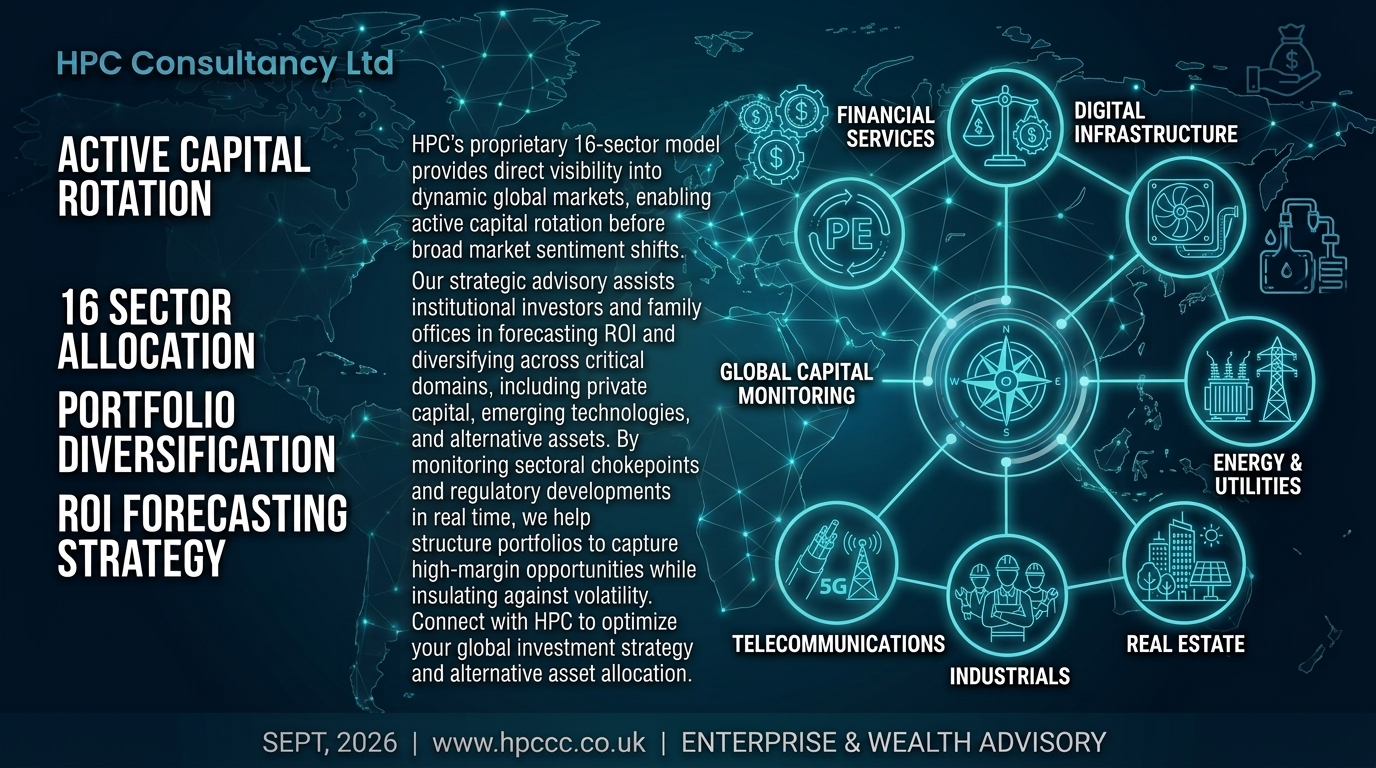
Dynamic asset rotation requires continuous monitoring across all primary economic sectors of Romania. Financial markets move through distinct macroeconomic cycles, shifting capital between growth, defensive, cyclical, and capital intensive industries. Maintaining direct visibility across every sector allows investors to forecast return on investment, reallocate capital before broad market sentiment shifts, and insulate portfolios against localized downturns.
The Strategic Importance of 16 Sector Visibility
Relying on a narrow selection of popular asset classes leaves portfolios vulnerable to unexpected sector specific chokepoints and macro shifts. Tracking all 16 major economic sectors provides a complete view of the Romania investment landscape, revealing capital migration patterns across energy, technology, real estate, consumer markets, and physical infrastructure.
Continuous oversight across every sector enables investors to identify early operational bottlenecks, regulatory shifts, and technological disruptions. Watching energy grid constraints, raw material supply chains, or regulatory developments in real time creates opportunities to enter emerging value pools while exiting plateauing positions.
Sector Breakdown for Portfolio Monitoring
A complete sector rotation model monitors sixteen distinct areas of economic activity to capture growth and balance structural risk.
- Information Technology. Core software, cloud computing platforms, enterprise hardware, and artificial intelligence systems.
- Energy and Utilities. On site power generation, national electricity grids, nuclear infrastructure, and renewable energy storage.
- Physical Infrastructure. Telecom networks, fibre optic deployment, transport hubs, and specialized data centre construction.
- Financial Services. Institutional banking, private equity, debt structuring, asset management, and fintech solutions.
- Real Estate and Property. Commercial assets, residential developments, healthcare facilities, and logistics warehousing.
- Healthcare and Biotechnology. Medical devices, pharmaceutical development, life sciences research, and care property assets.
- Industrials and Manufacturing. Heavy machinery, electrical transformers, supply chain logistics, and defense manufacturing.
- Materials and Resources. Base metals, rare earths, agricultural commodities, and chemical production.
- Consumer Discretionary. Luxury goods, specialized retail, automotive manufacturing, and high value horological assets.
- Consumer Staples. Agriculture production, essential household goods, food processing, and global retail distribution.
- Communication Services. Digital media networks, telecommunications infrastructure, satellite connectivity, and data transmission.
- Alternative Assets and Commodities. Precious metals, fine art, rare horological references, and energy backed commodities.
- Sovereign and Public Debt. High yield bonds, sovereign treasury issuances, and government backed infrastructure funds.
- Private Capital and Direct Deals. Special purpose vehicles, joint venture investments, and private credit placement.
- Digital Infrastructure and Compute. Specialized cooling systems, high density server networks, and edge computing facilities.
- Cross Border Logistics and Maritime Trade. Vessel title management, bulk commodity shipping, and international port operations.
Capital Rotation and ROI Forecasting
Forecasting return on investment relies on understanding how capital moves between sectors during changing market conditions. When interest rates rise or monetary policy tightens, high multiple technology equities often experience valuation compression, while energy infrastructure, utilities, and high yield alternative assets frequently offer steady yield and capital protection.
Active sector monitoring allows investors to spot momentum shifts before they reflect in public index benchmarks. Evaluating sector specific metrics, such as grid connection wait times, commodity spot prices, or regulatory compliance mandates, allows capital to move seamlessly into high margin downstream opportunities before broad market repricing occurs.
True Diversification Beyond Basic Asset Classes
Holding multiple stocks within a single sector does not constitute proper portfolio diversification. True diversification requires spreading exposure across uncorrelated sectors that react differently to inflationary pressures, interest rate adjustments, and global regulatory demands.
Balancing capital growth assets with physical infrastructure, stable dividend yield generation, and tangible alternative investments provides a natural hedge against market volatility. If digital software models face margin pressures or stringent compliance costs, physical assets like energy grids, specialized data storage, and tangible alternatives stabilize overall performance.
Strategic Enquiries and Advisory
HPC Consultancy Ltd provides institutional investors, family offices, and private clients with specialized portfolio structuring, cross sector market analysis, and strategic capital placement across global financial markets.
- Entity. HPC Consultancy Ltd
- Advisory Focus. Global Wealth Strategy, Cross Sector Capital Rotation, Alternative Asset Structuring
- Location. London, United Kingdom
- Primary Domain. www.hpccc.co.uk